DFOX vs AutoTuner vs FLEX: The Uncomfortable Comparison No One Wants to Make

In tuning circles, there are topics everyone talks about… but rarely with complete honesty. Comparisons between tools are usually made cautiously, diplomatically, and without going into real depth. The reason is simple – every device has its fans, distributors, and business models behind it.
But if we put marketing aside and look at reality from the perspective of a workshop investing serious money and building a reputation – the question is not “which is the best,” but “which is the most suitable for a specific business model.”
The Philosophy Behind the Tools: Speed vs Control
DFOX – Focus on Accessibility and Practicality
DFOX is positioned as a professional tool that achieves a balanced ratio between functionality and cost efficiency. It is suitable for workshops looking for stable access to ECU units via OBD and Bench modes without investing in the highest price segment. The tool offers good coverage of popular ECU generations, an intuitive interface, and flexibility within a Master/Slave model, making it a practical solution for everyday workshop operations.
On the other hand, DFOX is a reasonable choice for workshops that work with an external file provider and do not perform complex boot operations with every intervention. It provides sufficient functionality for standard chip tuning and a stable workflow. Limitations may appear with the newest and highly protected controllers, where the depth of access and options for more specific operations may be more limited compared to higher-end tools.
AutoTuner – Minimalism and Automation
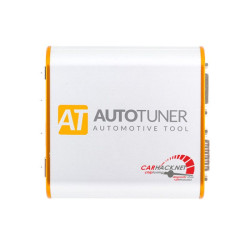
AutoTuner is built around a clean and clearly structured concept: a максимально automated process, minimization of the human factor, and a strong focus on stable OBD and Bench work. The tool is designed to handle the logic of communication with the ECU unit, ensuring an extremely stable connection, often very fast OBD access, and regular updates with optimized procedures for supported controllers. This makes it predictable and efficient in a daily workshop environment.
AutoTuner is preferred by workshops that value execution speed and want as little manual intervention in the process as possible. It is especially suitable for passenger cars and high-volume commercial tuning. Limitations may appear in more complex cases requiring deep boot access, full dump extraction, or work with specific and less common controllers, where procedural flexibility may be more limited compared to tools oriented toward more detailed manual control.
FLEX – Control, Depth, and Expandability
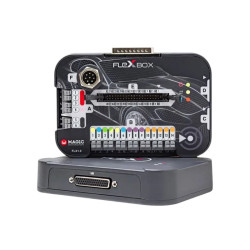
Developed by Magicmotorsport, FLEX is designed for professionals seeking maximum control over the ECU and TCU reading and writing process. It offers OBD, Bench, and Boot modes, full read capability (Full Read) for a large number of controllers, work with micro, EEPROM, and Flash memory, as well as wide support for automatic transmissions. This makes it particularly valuable when dealing with modern and highly protected ECU generations and complex technical interventions.
FLEX is a preferred tool when working with controllers such as Bosch MD1/MG1, Siemens SID generations, ZF automatic transmissions, and in cases of module recovery after failed writing or software corruption. However, it is not a solution for every workshop. It requires a more serious investment and stronger technical preparation to be used to its full potential. For a startup business, its capabilities may exceed real needs in the first years, but for workshops aiming to expand and handle complex cases, it represents a strategic tool with long-term value.
How to Make the Right Choice
Before investing in any tool, ask yourself three questions. The answers will determine not just which device to invest in, but what your workshop will look like in a few years:
- Do I mainly work with common vehicles or with newer and protected ECUs?
- Do I offer TCU tuning and module recovery?
- Do I want high turnover or maximum control?
These questions define your business model. If you serve a high flow of standard vehicles, your priority may be speed and a predictable process. If you handle complex cases, modern protected controllers, and deeper interventions, your focus should be on flexibility and technical control. The choice between DFOX, AutoTuner, and FLEX is not about popularity, but about alignment between the tool and your actual practice.
If you are looking for objective consultation, a real comparison, and assistance in choosing between DFOX, AutoTuner, and FLEX, contact us. The CarHack team will analyze your business model, explain the real differences beyond marketing, and help you make an investment that makes strategic sense.
Related Products